Jupiter Waterfront Home Buying: Docks, Seawalls & Insurance
September 3, 2026
September 3, 2026
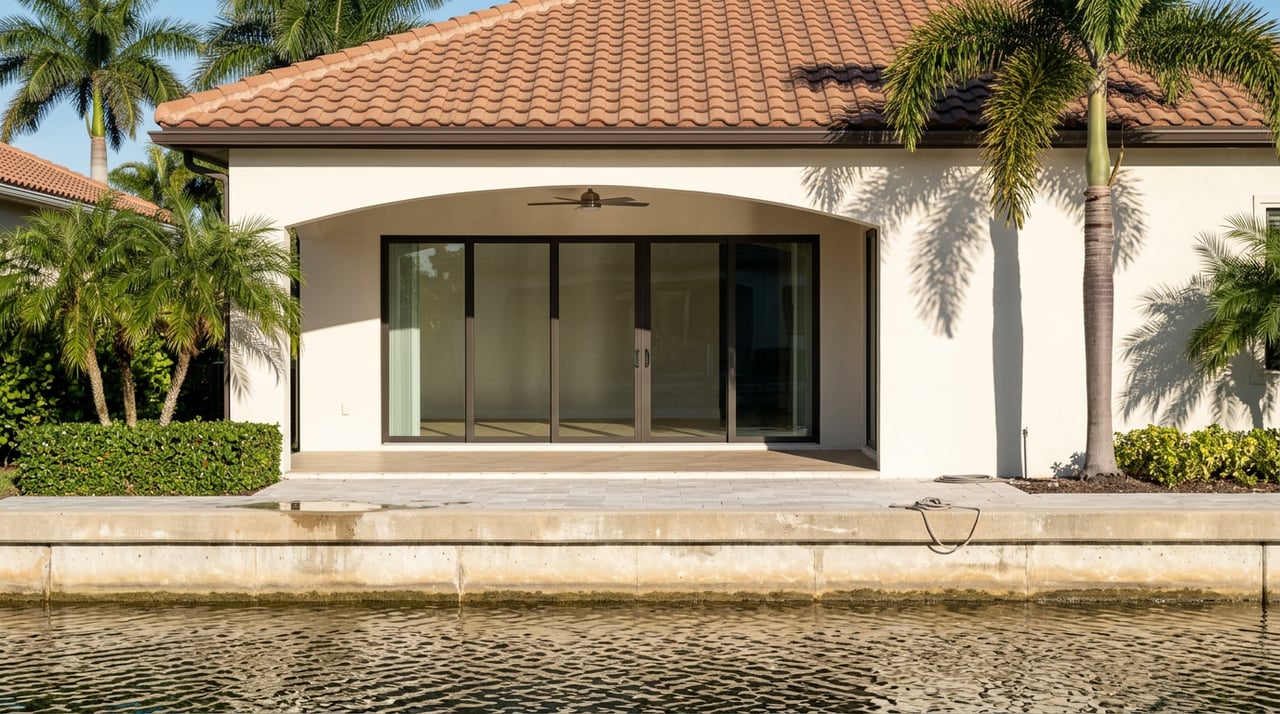
Every canal-front listing in Jupiter shows the same three photos: the pool, the kitchen island, the dock with water lapping against the pilings. The dock photographs well. What the photo does not show is the dock's legal status. Buyers can confirm that status during due diligence.
The same gap shows up twice more before a Jupiter waterfront deal closes. As Alliance Permitting explains, the Town handles permits for both the seawall holding the yard in place and the dock. The flood insurance premium on the house next door will not predict yours, even if the two homes look identical from the street. None of this sits in one disclosure or one line item. All of it is knowable before you write an offer, if you know where to look.
A dock in a listing can have a legal status that is not clear from the listing alone.
The dock's status matters if you want to replace, extend, or reconfigure what's there. A structure with unclear deed status can complicate financing, insurance, and any future permit application, because the reviewing agency needs to know exactly what it's authorizing changes to. Title and permit records can also clarify what a reviewing agency would be asked to authorize.
Jupiter waterfront owners may deal with more than one government body for the same stretch of shoreline, so separate agency records may need to be reviewed before a sale closes.
| Agency | What It Controls | Why It Matters at Closing |
|---|---|---|
| Town of Jupiter Building Department | Permits for seawall and dock structures, cap elevation, structural specs, issued through the JCDS Portal at 210 Military Trail | Confirms the physical structure was built to code and legally permitted |
| Florida Department of Environmental Protection, Southeast District | All mangrove trimming or removal under the state's Mangrove Trimming and Preservation Act | Town code does not govern mangrove work at all. The Town's own guidance directs residents straight to the state for that permit. |
| U.S. Army Corps of Engineers | Endless Life Design says U.S. Army Corps of Engineers permits are required for dredging to reach or maintain workable water depth | Adds a federal review layer on top of Town and state permits for certain lots |
A single shoreline project, replacing a seawall that also requires trimming mangroves for access, can touch all three. That's why waterfront due diligence in Jupiter takes longer than a standard inland purchase, and why the question worth asking early is simple: who permitted what's already here, and does it match what the listing implies.
Seawall replacement along the Loxahatchee is currently running $150,000 to $400,000 or more, depending on linear footage and site conditions. With Jupiter's waterfront listings carrying a median list price near $715,000 as of August 2026, a full seawall replacement can represent a fifth to well over half the purchase price of the home itself. Dock and lift reconstruction, where needed, adds another layer of cost on top.
A standard home inspection is scoped for a dry lot. It checks the roof, the HVAC, the slab. It was never built to evaluate a structure sitting partly below the waterline. That's the reason a separate marine or seawall assessment belongs in the same due diligence window as the home inspection, not as an afterthought once the deal is already moving toward closing.
Here is the assumption most buyers carry into a Jupiter waterfront search: the flood zone on the listing sheet tells you roughly what insurance will cost. That assumption is out of date. Under the pricing approach insurers now use, a property's flood zone no longer sets the price on its own. Individual elevation, foundation type, and distance to the water source now drive the premium.
That means two homes on the same Jupiter canal, in the same flood zone, built the same year, can carry materially different flood insurance costs. A home with a documented elevation certificate, a newer roof, and an addressed seawall will often price better than a comparable home next door without that paperwork, even though both sit in an identical zone on the map.
Put the three pieces together and the pattern is clear. Comparable sales on the MLS help inform the sale price of a Jupiter waterfront home. The cost of ownership depends on three separate processes: Town permitting, state environmental review, and insurance underwriting based on an elevation certificate.
If you're actively buying or selling waterfront in Jupiter, a few things are worth doing before your inspection period closes rather than after.
Pull the dock's permit history and confirm its deed status early. Don't wait until you want to modify it to find out what you actually own. Ask whether any part of the seawall or shoreline sits near the Aquatic Preserve boundary, since that adds a state review step on top of the Town's own permit process and stretches the timeline. Get a real flood insurance quote, tied to an elevation certificate, before you write the offer rather than after it's accepted, because the number can move once an underwriter looks at your specific property rather than just its zone.
If you're selling, the same documentation becomes a selling point rather than a liability. A clean permit file, an up-to-date elevation certificate, and evidence of seawall maintenance tell a buyer's lender and insurer that the carrying costs on this particular property are already understood, not still an open question.
This is where a background in mortgage origination earns its keep. Reading an elevation certificate, understanding how an underwriter will price a seawall's remaining useful life, and knowing which permit office to call first are financing questions as much as real estate ones. Getting that sequence right before an offer goes in, rather than scrambling to catch up mid-contract, is what separates a smooth Jupiter waterfront closing from one that runs long.
Does the Town of Jupiter handle mangrove trimming? No. The Town's own guidance sends residents directly to the Florida Department of Environmental Protection's Southeast District office for any mangrove trimming or removal permit, since state law governs the trees, not town code.
If a canal home already has a dock, do I still need to check anything before closing? Yes. A dock's physical presence doesn't confirm its legal status. Check the title and permit records before relying on it if you want to modify or rebuild it.
Will my flood insurance cost the same as my neighbor's? Not necessarily. Current flood insurance pricing looks at each property's individual elevation, foundation type, and distance to water, so two homes in the same flood zone on the same street can carry different premiums.
If you're weighing a purchase or sale on Jupiter's waterways and want someone who reads the permit history and the insurance quote with the same attention as the floor plan, Janet Cordero has spent 25 years in northern Palm Beach County real estate with a mortgage background built for exactly this kind of due diligence. Request Your Free Home Valuation to start the conversation before you write an offer, not after.
This article is general information, not legal, tax or financial advice. Consult a qualified professional about your situation.
Unlock the door to your real estate dreams with Janet. Do you desire the coastal lifestyle with our region's stunning beaches or the more rural setting with acreage? We have it all with vast real estate opportunities. Janet will match you with the perfect buyer-seller experience while delivering exceptional results.